The Best Time to Visit Bath (2026 Guide)
Bath is a year-round city, but the month you pick changes the day you get.
 Written with James Thornton, London to Bath day tour guide & heritage specialist
Short answer
The best time to visit Bath is late spring (around May) or early autumn (around September), when the weather is decent and the crowds are thinner than the July and August peak. December brings the Christmas market and its own busy charm. Bath is compact and works in any season, and a wet day is easy to spend indoors at the Roman Baths, the Abbey and the museums.
Bath does not really have a wrong season, which is a rare thing to say about a British city. The honey-coloured stone looks good in May sunshine and just as good under December lights, and because so much of what you come to see is indoors, a grey sky rarely spoils the day. That said, the month you choose genuinely changes the experience, from how long you queue to whether there is a festival in full swing when you arrive.
What is the best overall time to visit Bath?
The best overall time to visit Bath is May or September. Both months pair decent weather with crowds well below the July and August peak, prices sit lower, and September adds the Jane Austen Festival. December is the festive exception, when the Christmas market fills the streets around the Abbey with wooden chalets.
For most people that sweet spot holds year after year. May tends to bring longer, brighter days without the full summer squeeze, and September does the same on the way out of summer. Both balance reasonable weather against thinner crowds, which is the combination that makes a day trip feel unhurried rather than shoulder-to-shoulder.
If your dates are fixed and they fall in high summer or midwinter, do not lose heart. Bath rewards a bit of timing tactics whatever the month, and the sights themselves are as good in January as in June.
| Season | Crowds | What defines it |
|---|---|---|
| Spring (March to May) | Moderate, building | Gardens green up; prices below peak |
| Summer (July and August) | The peak | Longest days; book the Roman Baths ahead |
| Autumn (September and October) | Ebbing | Jane Austen Festival in September |
| Winter (November to February) | Market-busy, then quietest | Christmas chalets, then the cheapest months |
What is Bath like in spring?
Spring brings Bath's gardens back to life with moderate crowds and lower prices than summer. Parade Gardens and Prior Park green up, the light flatters the Georgian stone, and hotel and train costs sit below peak. Weather is changeable, so pack a waterproof layer, but a bright May day here is hard to beat.
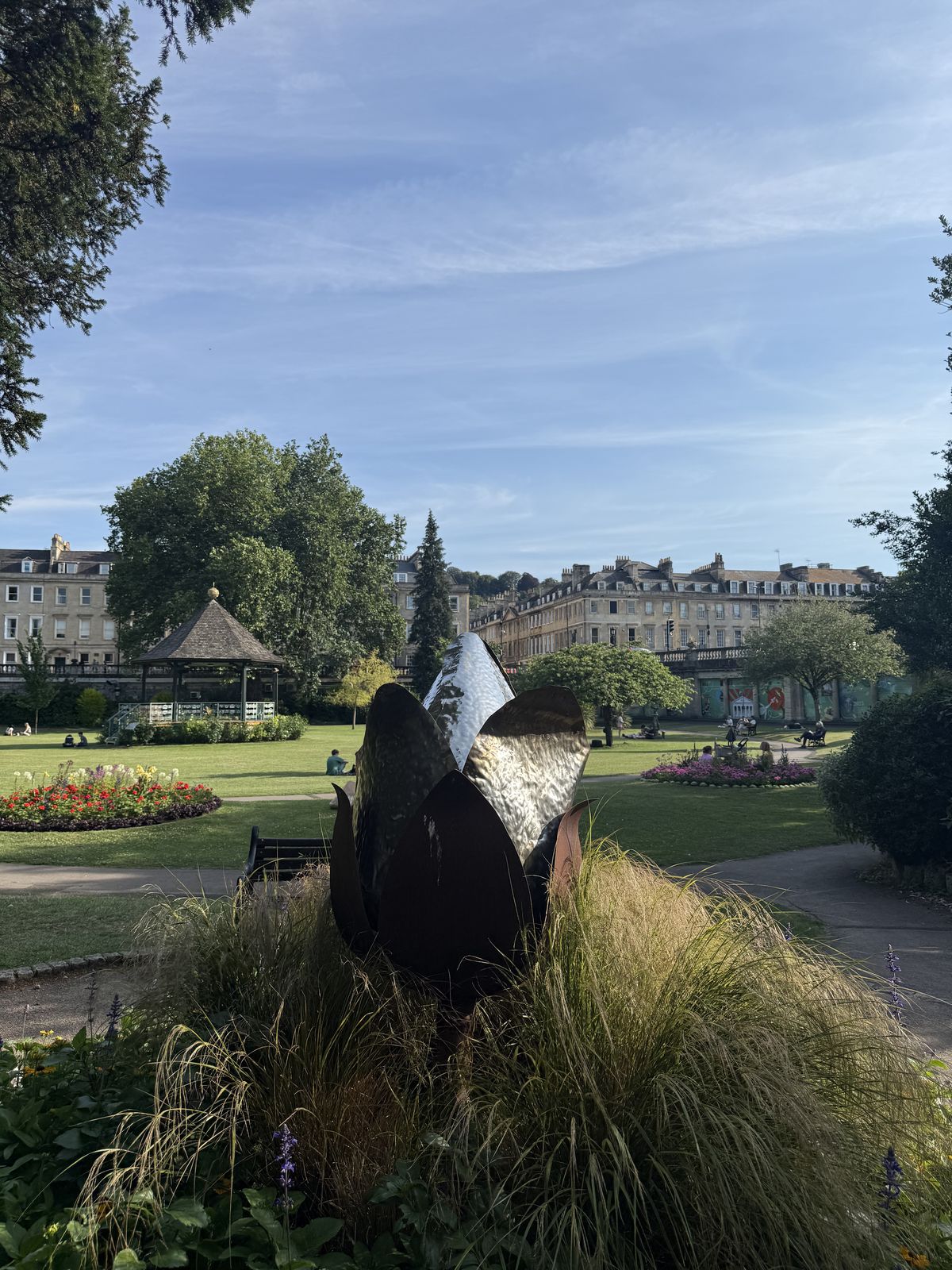
Spring is arguably the loveliest run of the year here. The parks and the gardens along the river wake up first, the terraces catch a kinder light, and the crowds build toward summer without reaching full pitch. It is a forgiving month for photographs too, before the coach-party season properly begins.
Is summer a good time to visit Bath?
Summer is Bath at its liveliest and busiest, roughly July and August, when school holidays bring the biggest crowds and the longest queues. It still works well if you plan: book a timed Roman Baths ticket in advance and aim for first entry or the final hour, when coach parties thin out noticeably.
The upside is warm evenings, open-air everything, and the city at its most animated. In good weather the open-top sightseeing bus is a lovely way to take in Bath from the top deck, a separate booking from the featured London day tour, and if it suits your day, you can book it here. The downside is queueing, especially at the Roman Baths, and the need to commit to timed tickets before you travel. If you would rather not juggle any of that yourself, a guided day tour to Bath from London takes the timing and the ticketing off your plate on the busiest days.
What happens in Bath in autumn?
Early autumn is one of Bath's best windows. September often keeps its summer warmth while crowds ebb, and the Jane Austen Festival fills the streets with thousands of costumed visitors and a Grand Regency Promenade. Later autumn turns cooler and wetter, which suits a city whose best sights sit indoors.
September is the quiet star of the calendar. The Jane Austen Festival runs each September with Regency dress-up, costumed promenades and events around the city that lived in her novels, and 2025 marked her 250th birthday year. Bath features in Northanger Abbey and Persuasion, and Austen herself lived here from 1801 to 1806, so the festival lands on genuinely relevant ground. Later autumn brings cooler, wetter days, which is the moment Bath's indoor riches really come into their own.
Is Bath worth visiting in winter and at Christmas?
Yes, winter is two trips in one. The Bath Christmas Market runs roughly from late November to mid-December, with 150 to 200 or more wooden chalets set through the Georgian streets around the Abbey. January and February are the quietest, cheapest months, ideal for the steaming Roman Baths and the museums.

Winter splits into two moods. The market weeks are busy, festive and genuinely atmospheric under the floodlit Abbey front, and the dates shift each year, so check them on the official Bath Christmas Market site before you commit. Once the chalets pack up, January and February are Bath at its emptiest, and while the weather is often cold and damp, that is precisely when the Roman Baths steam most photogenically and the museums feel like they are yours. A wet winter day spent between the Roman Baths, Bath Abbey and the Pump Room is no compromise at all.
| What's on | When | Worth knowing |
|---|---|---|
| Jane Austen Festival | September each year | Thousands of costumed visitors and a Grand Regency Promenade; Austen lived in Bath 1801 to 1806 |
| Bath Christmas Market | Roughly late November to mid-December | 150 to 200-plus wooden chalets around the Abbey; exact dates shift each year |
| The quiet stretch | January and February | The cheapest, emptiest weeks of the year |
What is the best time of day for the Roman Baths?
Go at opening or in the last hour or two before closing, whatever the season. The Roman Baths drew 1,034,160 visitors in 2025, and most of them come through the middle of the day. Book a timed ticket ahead, allow about 1.5 to 2 hours, and the terraces feel almost private.
Whatever month you pick, this is the single most useful trick in Bath. The site runs on timed tickets and is busiest through the middle of the day, so the first entry and the final stretch before closing give you quieter terraces around the Great Bath, better photographs, and more room to take in the museum, the Temple pediment and the gilded head of Sulis Minerva. Do not print a price from memory: check the official Roman Baths site for current tickets and hours. For a fuller walk-through, our guide on whether the Roman Baths are worth it goes deeper.
| Time slot | What to expect |
|---|---|
| First entry at opening | The quietest terraces and the best photographs |
| Late morning to mid-afternoon | The daily peak, when coach groups arrive |
| Last hour or two before closing | Crowds thin again, softer light on the Great Bath |
| How long to allow | About 1.5 to 2 hours, audio guide included |
So when should you go?
Go in May or September for the best all-round balance, late November or early December for the Christmas market, and deep winter for the quietest, cheapest version of the city. Bath is compact and largely indoors when it matters, so no month you pick will actually spoil the trip.
If you can choose freely, take the shoulder months. If you want the festive city, aim for the market window and book everything early. If you want Bath at its calmest, come in deep winter and lean into the indoor sights; the official tourism board lists what is on for your exact dates. Once your month is settled, how to get from London to Bath covers the trains, tickets and timing to get you there.
Month by month, how does Bath change?
Every month here has a character. May and September are the all-round winners, July and August the busy peak, late November to mid-December the festive market, and January and February the quiet, cheap floor of the year. Because so much of Bath sits indoors, no month actually ruins the trip.
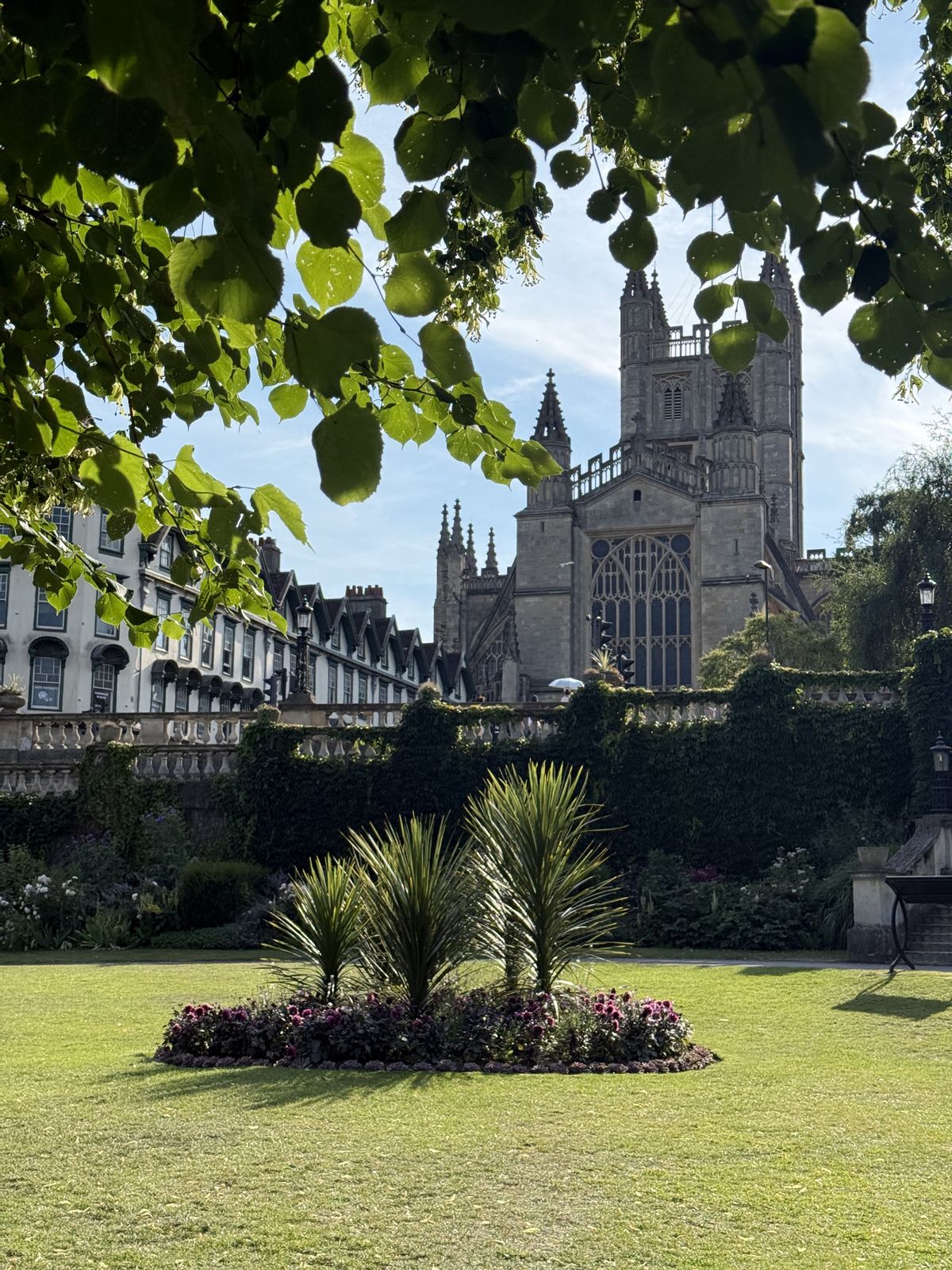
The table below reads the year as a scorecard, so you can line up your dates against weather, crowds, daylight and what is on. The pattern is easy to hold in your head. The shoulder months, roughly May and September, give you the best trade of decent weather against space to move. High summer brings the longest days and the biggest queues in equal measure. Autumn cools and dampens as it goes, which quietly plays to Bath's hand, since the Roman Baths, the Abbey and the museums are all indoors. Winter then splits in two: the market weeks of late November and early December are busy and festive, and the deep-winter stretch that follows is the emptiest, cheapest window of the lot. Pick the row that matches your dates and plan around its one weak spot.
| Month | Weather feel | Crowds | Daylight | What's on |
|---|---|---|---|---|
| January | Cold, often damp | Quietest of the year | Short | Steamy Roman Baths, near-empty museums |
| February | Cold, brightening late | Very quiet | Lengthening | The cheapest visiting weeks |
| March | Cool, changeable | Building | Growing | Gardens starting to green up |
| April | Mild, showery | Moderate | Longer | Spring blooms, Easter break busier |
| May | Bright, mild | Below peak | Long | A sweet spot for weather and space |
| June | Warm, long days | Rising | Longest | Long light, summer season warming up |
| July | Warm, busy | Peak | Long | School holidays, book the Baths ahead |
| August | Warm, busy | Peak | Long | Busiest queues of the year |
| September | Warm, easing | Ebbing | Shortening | Jane Austen Festival, a top all-rounder |
| October | Cooler, wetter | Thinner | Shorter | Indoor sights come into their own |
| November | Cold, damp | Rising late month | Short | Christmas market opens near month end |
| December | Cold, festive | Market-busy | Shortest | Christmas chalets around the Abbey |
How do the crowds shift through the day and week?
Crowds in Bath follow a daily and weekly rhythm rather than staying constant. Coach parties swell the middle of the day, so opening and the last hour run calmest. Weekdays beat weekends, and festival or market days pull the biggest numbers. Time the Roman Baths for the edges of the day and the city feels far emptier.
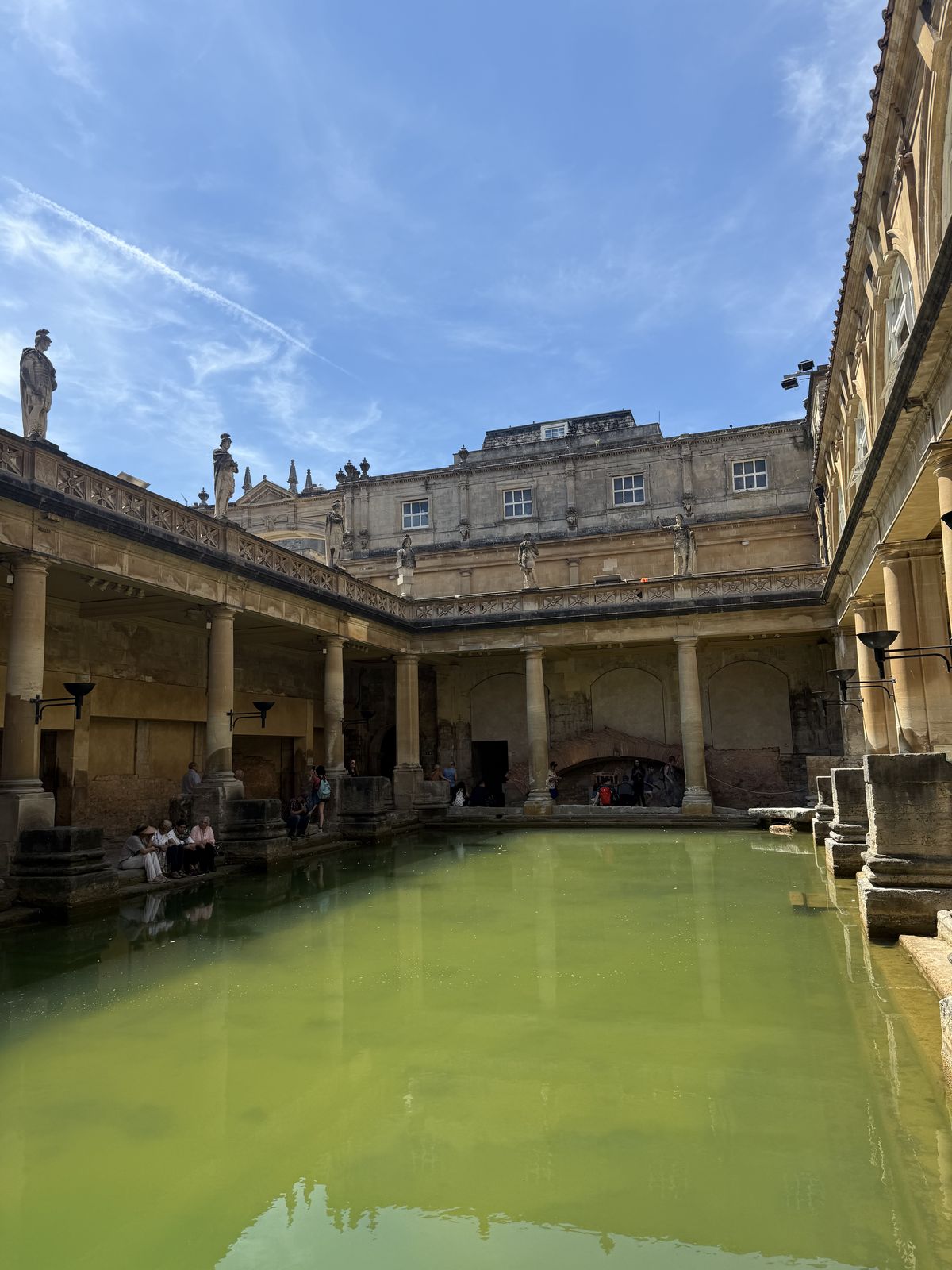
Choosing the right month is only half the timing game; the hour matters just as much. Bath's headline sights, the Roman Baths above all, fill and empty on a daily tide. Independent visitors and coach groups both cluster through the late morning and early afternoon, which is when queues are longest and the Great Bath terraces most crowded. Arrive at first entry, or roll in for the final hour or two before closing, and the same rooms feel calm. The weekly pattern rhymes with that: a Tuesday or Wednesday is noticeably lighter than a Saturday, when locals and weekend-break visitors add to the mix. Then there are the spike days. A September festival weekend or a Christmas-market Saturday will be the busiest the city gets, so if you are chasing quiet, steer around both. The single most useful move stays the same all year, which is to book a timed Roman Baths ticket for an edge-of-day slot before you travel.
| When | Crowd level | Note |
|---|---|---|
| First entry at opening | Lightest | Quiet terraces, the best photographs |
| Late morning to mid-afternoon | Heaviest | Coach groups arrive |
| Last hour before closing | Easing | Softer light, thinner crowds |
| Weekdays | Lighter | Better than weekends year-round |
| Weekends | Busier | Locals and short-break visitors |
| Festival and market days | Busiest | September and the Christmas weeks |
What should you pack for Bath by season?
Pack for a compact, walkable, often changeable city. Comfortable shoes matter all year, because Bath climbs hills and its streets are stone. Add a waterproof layer in spring and autumn, sun cover in high summer, and warm layers plus an indoor plan in winter. The weather here rarely stops a Bath day.
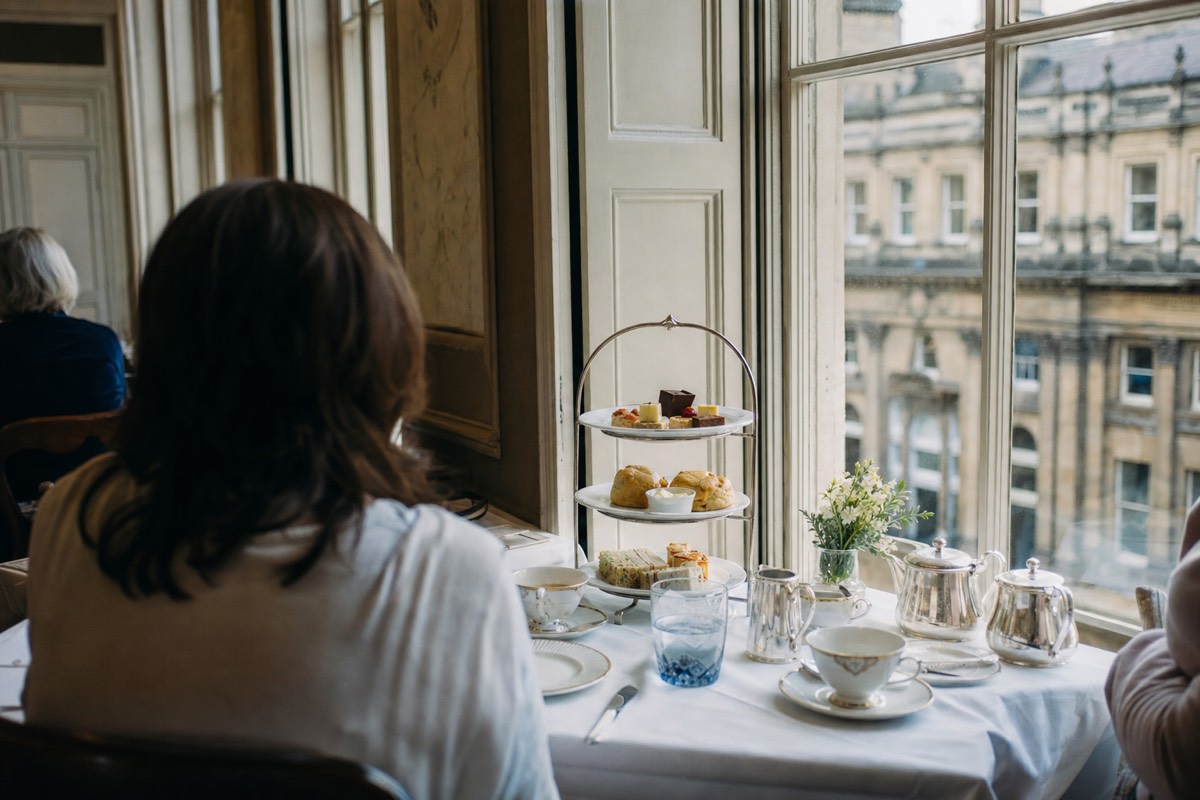
Whatever the season, footwear does the heavy lifting. Bath is built on a slope, its lanes are paved in stone, and a day here easily runs to several miles on foot between the Baths, the Abbey, Pulteney Bridge and the climb to the Royal Crescent, so leave the new shoes at home. Beyond that, dress for the month. Spring and autumn skies are changeable, and a packable waterproof turns a shower from a problem into a shrug. High summer wants sun cover and a bottle of water more than a raincoat, especially with the queues outdoors. Winter asks for proper layers, but here is the reassuring part: so much of what makes Bath worth the trip sits under a roof. A grey, wet forecast is close to irrelevant when your day can flow between the Roman Baths, Bath Abbey, the Pump Room and the city's museums. Plan a couple of indoor anchors and the weather stops running the day.
| Season | Pack | Because |
|---|---|---|
| Spring | Waterproof layer, comfy shoes | Changeable skies, hilly stone streets |
| Summer | Sun cover, water, light layers | Warm days and busy open-air sights |
| Autumn | Warm layer, umbrella | Cooler and wetter as the season turns |
| Winter | Coat, warm layers, an indoor plan | Cold, damp days suit the Baths and museums |
When is the Thermae Bath Spa at its best?
Aim for a weekday and stay for dusk. The Thermae Bath Spa is where you actually bathe in Bath's spring water, unlike the Roman Baths, and its open-air rooftop pool trades on city views that come alive as the light fades. Weekday sessions run quieter than weekends, and the bathing water sits at a gentle 33.5 to 34C.
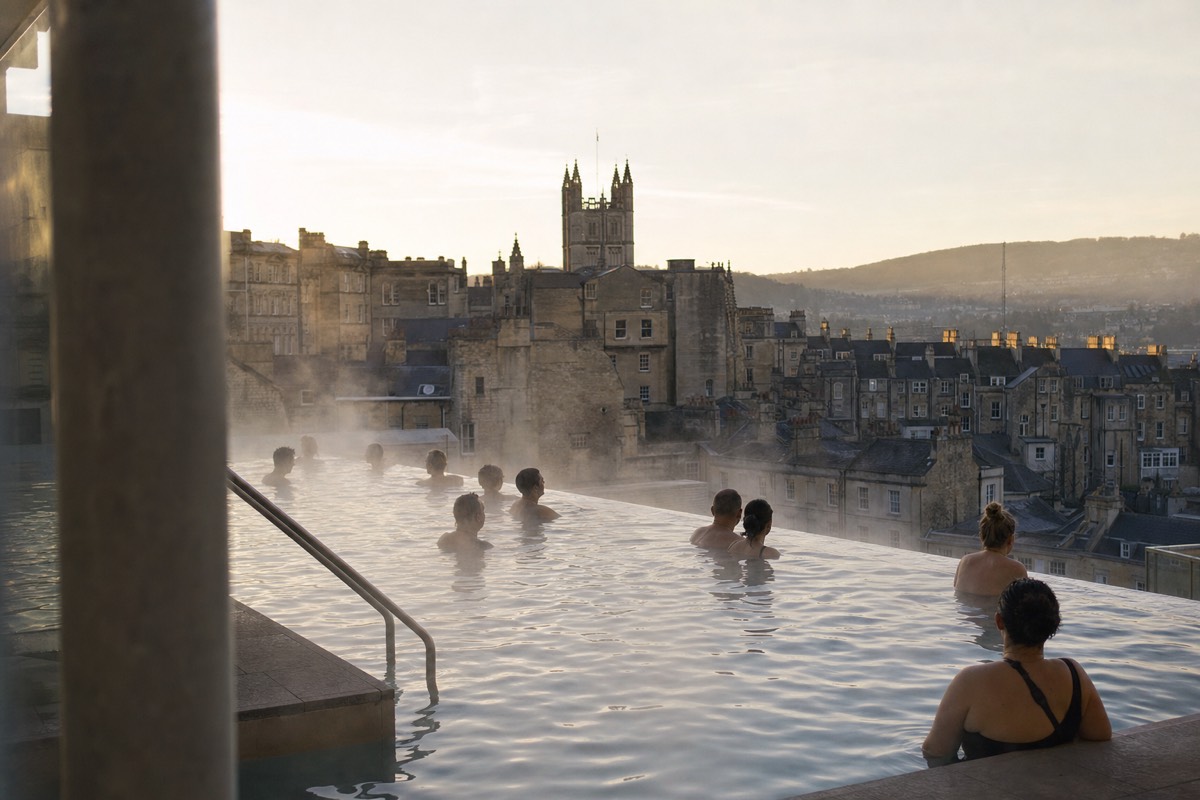
People often confuse the two bathing experiences, so it helps to be clear. At the Roman Baths you look but never touch, because that spring water rises at around 45 to 46C and the site is a museum. The Thermae Bath Spa is the modern counterpart, fed by the same springs, and it is the place you can genuinely soak. Its rooftop pool is the draw, an open-air stretch of warm water with the city and the hills laid out around it, and it reads best when the daytime glare softens toward evening. On timing, the same logic as the rest of Bath applies: weekday sessions are calmer than weekend ones, and the shoulder months keep the whole city quieter around your visit. Because the spa runs its own sessions and prices, check the official site for what is available on your date rather than trusting a figure from memory. Paired with a morning at the sights, an evening soak makes a neat, unhurried end to a Bath day.
| Roman Baths | Thermae Bath Spa | |
|---|---|---|
| What it is | Ancient site and museum | Modern working spa |
| Can you bathe? | No, look only | Yes, this is where you bathe |
| Water you meet | Around 45 to 46C spring, not for touching | Around 33.5 to 34C bathing pools |
| Signature moment | The Great Bath and the Sulis Minerva head | The open-air rooftop pool with views |
What month does James steer day-trippers toward?
If the date is yours to pick, James points people at May or September without hesitation. You get civil weather, room to move at the Roman Baths, and, in September, the Jane Austen Festival on top. His one firm rule holds every month: book the timed Baths ticket before you leave London.
James Thornton has run London-to-Bath day trips since 2022 and has guided well over a thousand international visitors through the city's Roman and Georgian heart, so he has seen how much the month colours a first visit. Left to choose, he sends people to the shoulder weeks of May and September every time. The weather is usually kind enough, the crowds have not hit their summer wall, and September throws in the Jane Austen Festival, which lands on real ground given Austen lived here and set two novels in the city. If your dates are fixed in high summer, he does not despair; he just tells you to book a first-entry Roman Baths slot and treat the middle of the day as walking-and-lunch time while the coach groups pile in. December he splits in two: come for the market and its atmosphere, but book everything early and expect crowds, or skip to January and February if you want Bath almost to yourself. The one thing he refuses to soften, whatever the season, is the timed ticket. He has watched too many summer visitors arrive without one and lose half a day, and it is, in his words, the cheapest mistake to avoid. Beyond that, he is relaxed: Bath is an indoor-rich city, so a wet forecast is never a reason to cancel.
Frequently asked questions
What is the best month to visit Bath?
May and September are the strongest all-rounders, balancing decent weather with thinner crowds than the July and August peak. September also brings the Jane Austen Festival.When is Bath least crowded?
January and February are the quietest and cheapest months. The weather is cooler and often wet, but that suits Bath, where much of the best sightseeing is indoors.When is the Bath Christmas Market?
Roughly from late November to mid-December each year, with wooden chalets set out around the Abbey. The exact dates shift, so check them for your year before booking.What is the best time of day to see the Roman Baths?
The first entry when it opens or the last hour or two before closing, when the crowds thin. Book a timed ticket in advance, especially in summer, and allow about 1.5 to 2 hours.Is Bath worth visiting in winter?
Yes. The Christmas market gives early winter real atmosphere, and the quieter deep-winter months are ideal for the Roman Baths, the Abbey and the museums. See whether Bath is worth visiting for the full picture.Plan your next step
City walk & Roman Baths entry
Have a travel date in mind? Pair a Blue Badge guided city walk with a self-guided visit inside the Roman Baths. Check your date before arranging the rest of your day.
About 3 hours; meet outside Bath Abbey’s main doors. Roman Baths entry and audio guide included; your guide does not lead the visit inside.
Start with this option, or compare the choices below.
Choose a date to see the published schedule.
Compare the options for your Bath plans
| Experience | Why choose it | Allow | What to account for |
|---|---|---|---|
| City walk & Roman Baths entry | Pair a Blue Badge guided city walk with a self-guided visit inside the Roman Baths. | 3 hours | About 3 hours; meet outside Bath Abbey’s main doors. Roman Baths entry and audio guide included; your guide does not lead the visit inside. |
| Roman Baths entry & audio guide | Explore the Great Bath, temple remains and museum at your own pace. | 2 hours | Timed admission in Bath with an audio guide. Allow 1½–2 hours as a planning estimate; no bathing or London transport. |
| Georgian Bath walking tour | Read the details of the Circus, Royal Crescent and quiet Georgian streets with a local guide. | 3 hours | Allow 2–3 hours; meet and finish at Bath Abbey. Exterior sightseeing on foot; paid interiors and travel to Bath are separate. |
| Jane Austen’s Bath & history trail | Trace Austen’s Bath and the city behind her novels with a guide. | 2.5 hours | About 2½ hours; select the English tour. Meet at the listing’s No. 17 meeting point. Museum admission and the Austen Centre’s internal tour are extra. |