Walking Georgian Bath: A Slow Route Through the Honey-Stone City
A first-person walking route through Georgian Bath, from the Royal Crescent and The Circus to Pulteney Bridge and the weir, taking the quiet lanes in between.
 By James Thornton, London to Bath day tour guide & heritage specialist
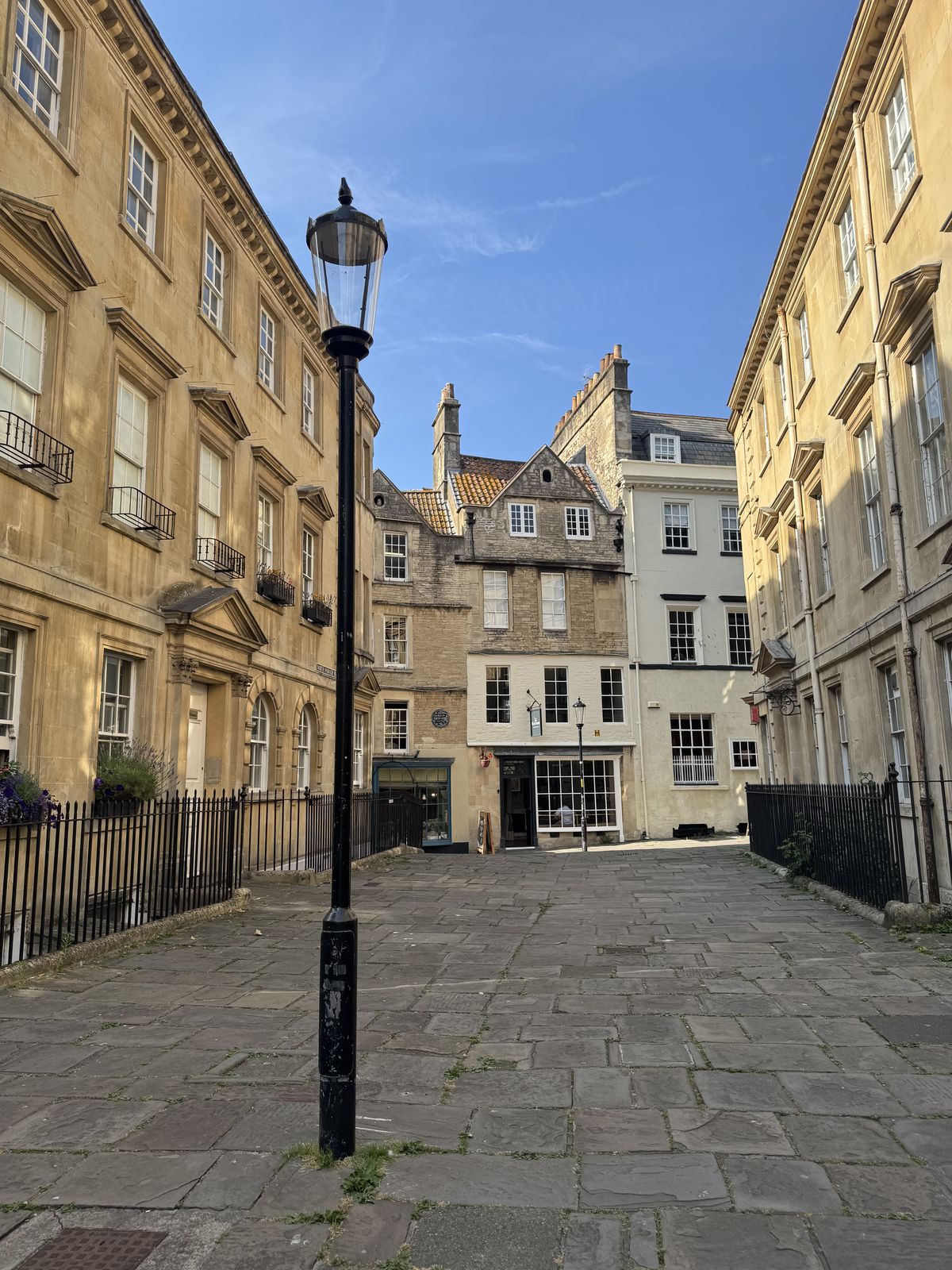
The first thing that gets you is the colour. Every wall in the centre of Bath is the same warm honey, a local stone that seems to hold the light even when the sky is doing nothing special. I'd taken a train down for the day with no plan beyond "walk about," and it turned into one of the best afternoons of aimless wandering I've had.
The whole city is a UNESCO World Heritage Site, and unlike a lot of places that carry that label, it earns it on foot. Here's the route I ended up taking, roughly, if you want a Georgian walk that keeps the crowds behind you for stretches.
Where should a Georgian walk through Bath start?
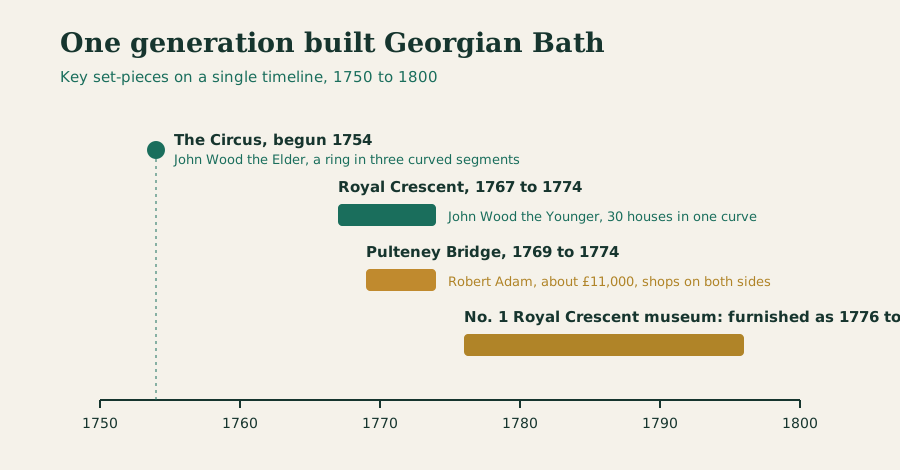
Start by the Abbey and climb straight to the Royal Crescent, getting the hill out of the way early. The Crescent is the biggest set-piece in Bath: thirty houses in one unbroken curve of columns, built between 1767 and 1774 to John Wood the Younger's design, with a great lawn spread out in front.
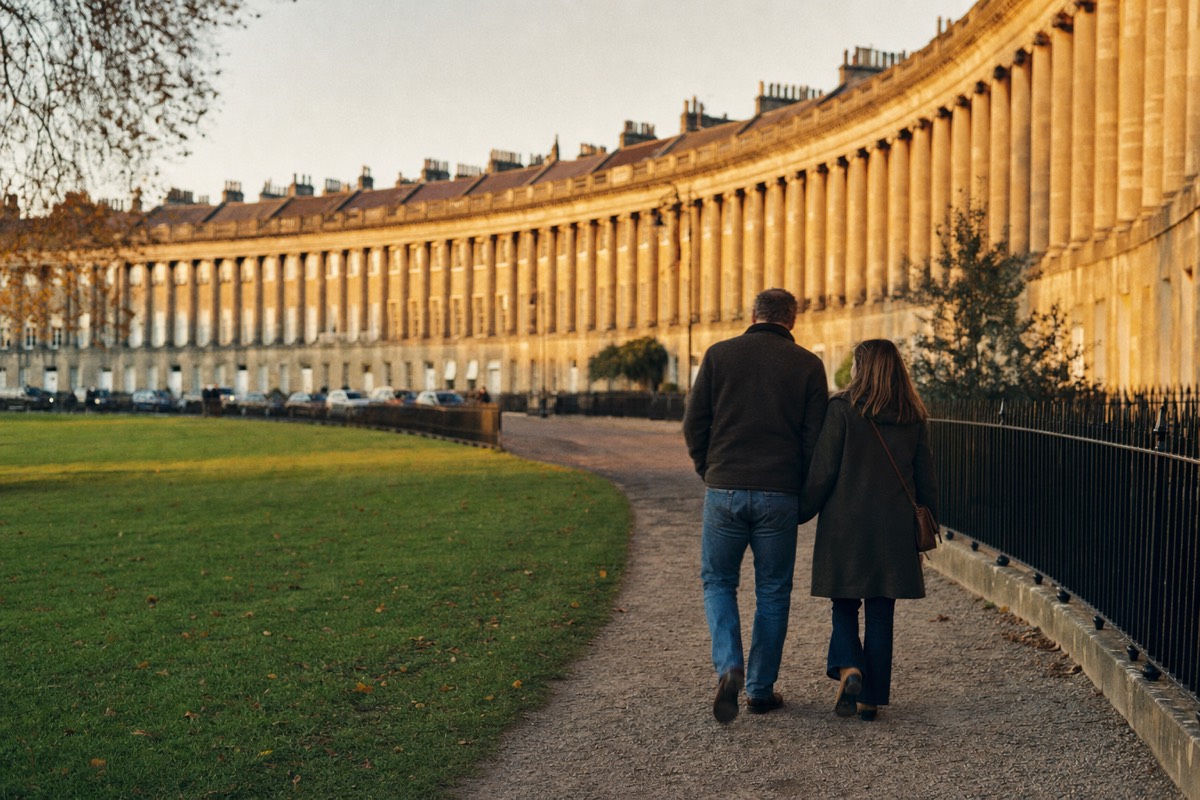
I started near the Abbey and worked uphill, because Bath is hilly and it's kinder to get the climb done early. The reward at the top is the Royal Crescent, and no photo prepares you for the scale of it. One continuous facade of columns, thirty front doors, one enormous sweeping curve.
There's a great lawn in front where people just lie about in good weather. I sat on the grass for twenty minutes doing nothing. If you want to see behind the frontage, No. 1 Royal Crescent at the end is done up as a period house museum, its rooms furnished as they would have looked between 1776 and 1796, so you can walk through the spaces a Georgian family actually used.
What makes The Circus worth the climb?
The Circus is a complete ring of townhouses in three curved segments, begun in 1754 to John Wood the Elder's design, so wherever you stand you face a continuous sweep of carved stone. Its three entrances line up with three streets, which means you never see the whole circle at once.
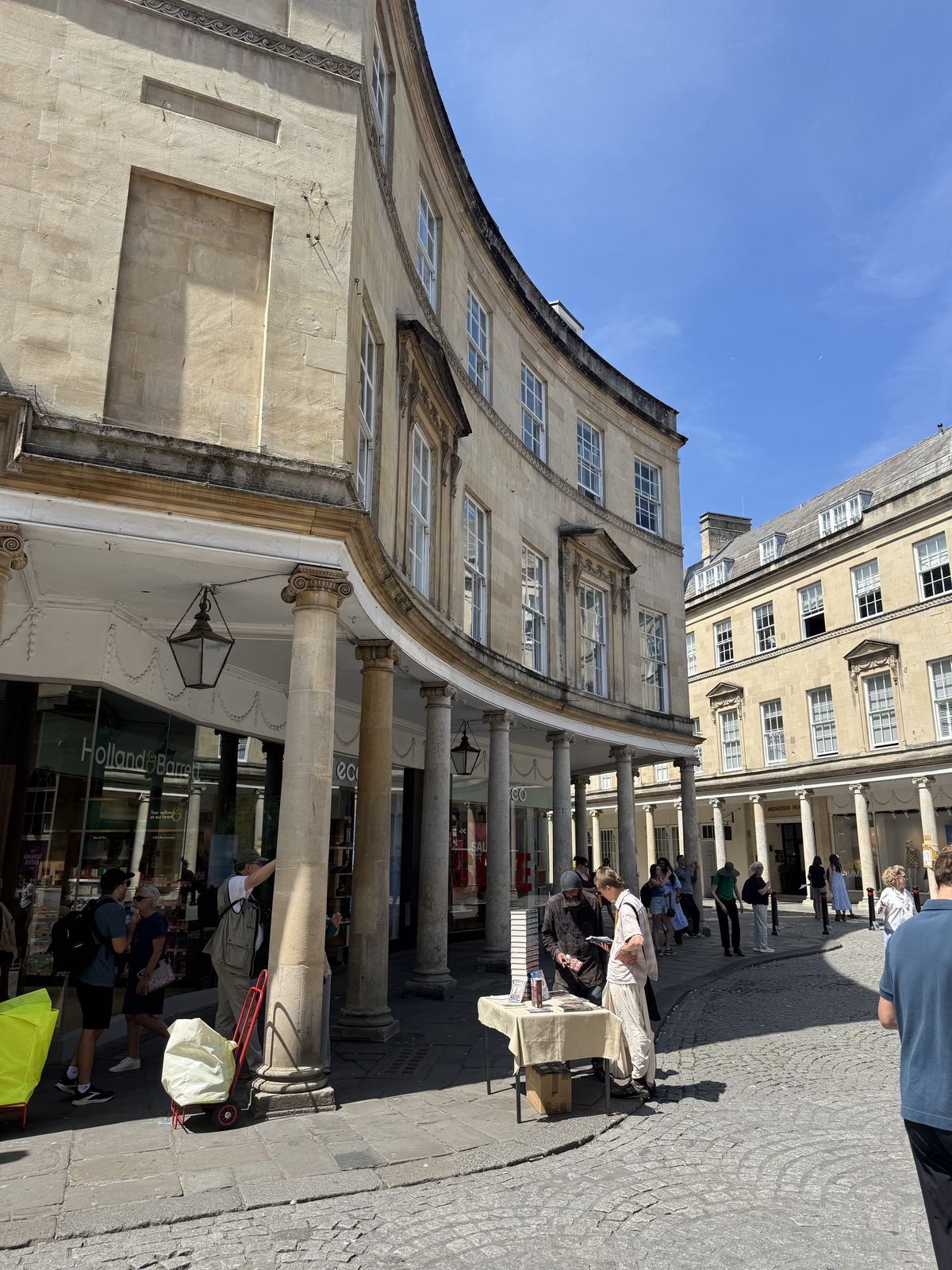
A short walk uphill from the Crescent is The Circus, and this is the one that made me stop and grin. There are huge plane trees in the middle now that soften the whole thing. Stand in the centre and turn slowly. The carved details run in bands right around, and it's theatrical in a way that feels deliberate.
Between the Crescent and The Circus runs a strip of green called the Gravel Walk, and it's the shortcut most day-trippers miss. It's a tree-lined path that carries you between the two big set-pieces without touching a road, and it's where a scene from a Jane Austen adaptation was filmed, which the plaques will happily remind you. If period drama is what draws you here, a guided Bridgerton filming-locations walk of Regency Bath traces the same honey-stone corners on screen, a separate booking from the featured London day tour, and you can see the tour here. Austen lived in Bath from 1801 to 1806 and the city runs right through Northanger Abbey and Persuasion; the Jane Austen Centre at 40 Gay Street sits on this side of town, and there's a whole Jane Austen side of Bath to chase down if that's your thing.
The set-pieces on this walk, side by side:
| Set-piece | Built | Designer | The detail that matters |
|---|---|---|---|
| Royal Crescent | 1767 to 1774 | John Wood the Younger | 30 houses in one unbroken curve |
| The Circus | Begun 1754 | John Wood the Elder | Full ring in three curved segments |
| Pulteney Bridge | 1769 to 1774 | Robert Adam | Shops line both sides of its full span |
| No. 1 Royal Crescent | 1767 to 1774 | John Wood the Younger | Museum furnished as it looked 1776 to 1796 |
Why are the quiet lanes the best part of the walk?
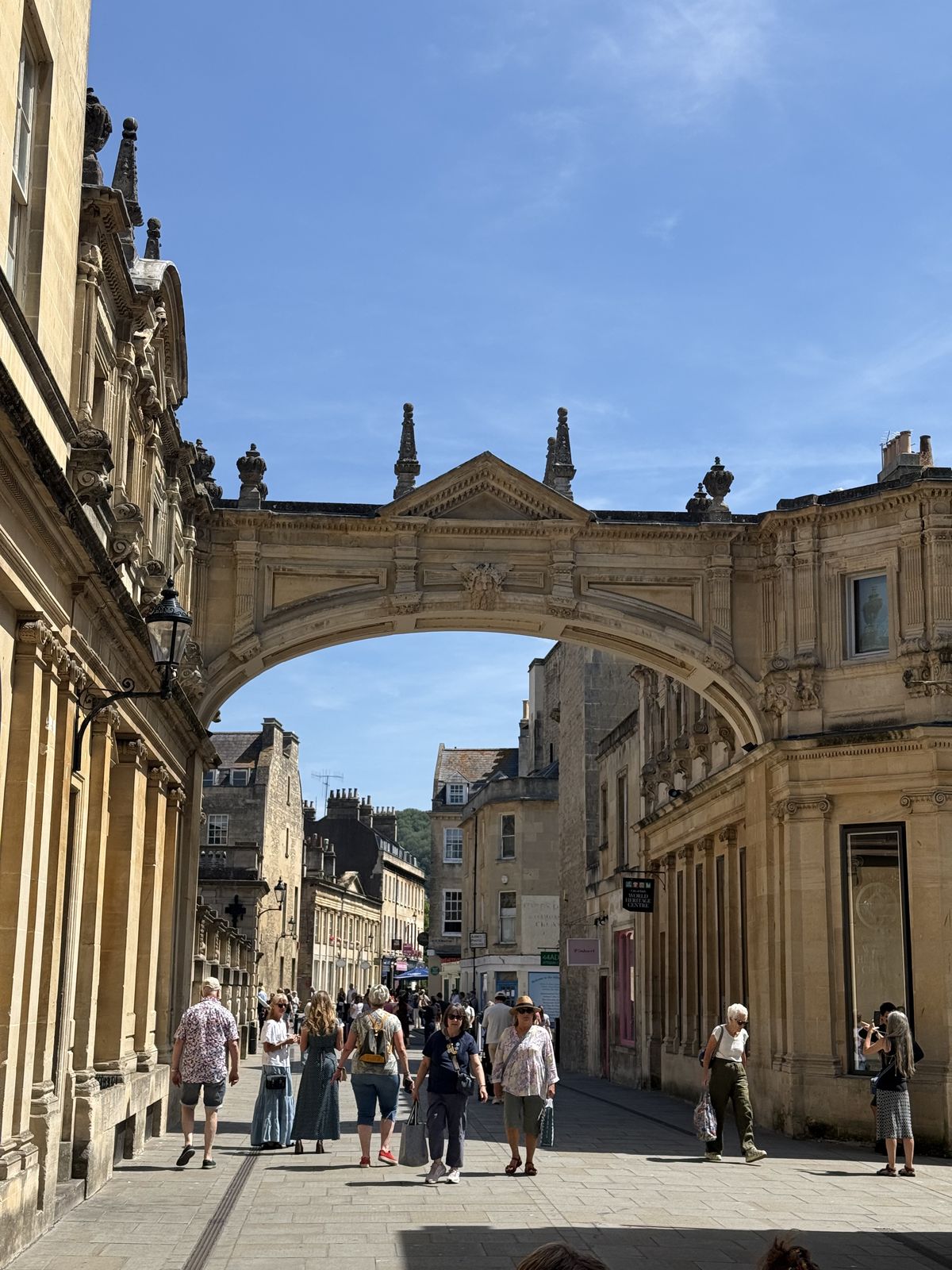
Because the lanes are where Bath stops performing. Between the monuments you get flagstones, gas-style lamps, fanlights over front doors and almost nobody about, all in the same honey-coloured local limestone the Georgians built the whole centre from. Peel off down anything narrow and quiet; it rarely disappoints.
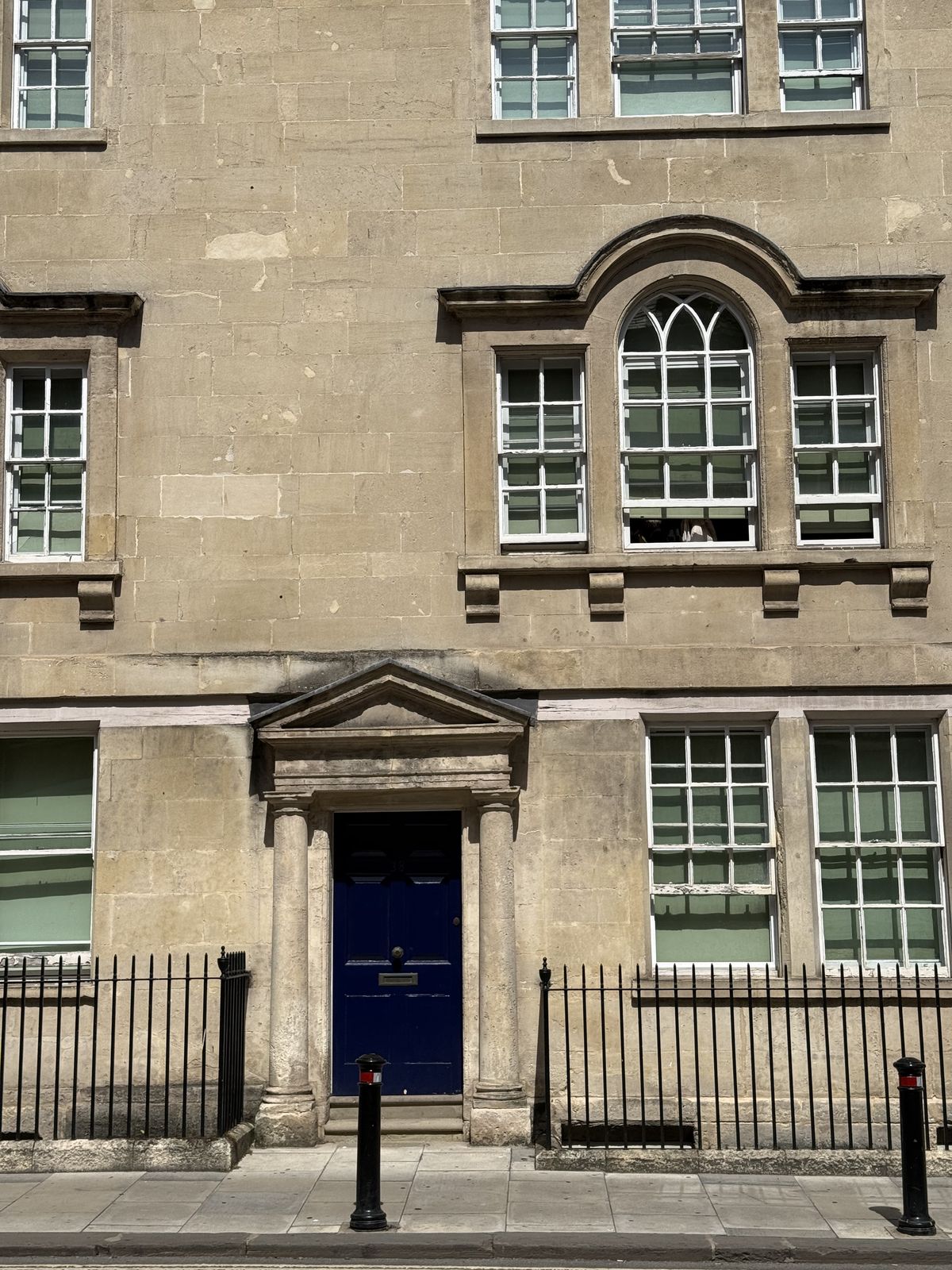
Between the big set-pieces, don't just take the main streets. I kept peeling off down whatever looked narrow and quiet, and it never once let me down. This is where the city stops being a list of monuments and just becomes a place people live. Washing lines, a cat on a step, someone's herb pots. The honey stone does the rest.
That stone genuinely ties the whole walk together. It's a local oolitic limestone, quarried in and around Bath, and the Georgians built almost the entire centre from it in the space of a few decades. That's why the city reads as one piece rather than a jumble of eras: it went up fast, in one material, to a shared idea of what a street should look like. Walk it in late-afternoon light, when the west-facing terraces go properly gold, and you understand why they protected the lot of it.
What is the best view of Pulteney Bridge and the weir?
From the south bank of the Avon or from Parade Gardens, looking back at the bridge above its horseshoe weir. On the bridge itself you would never know you were crossing water: Robert Adam's design, finished in 1774 for about £11,000, carries small shops across its entire span on both sides.
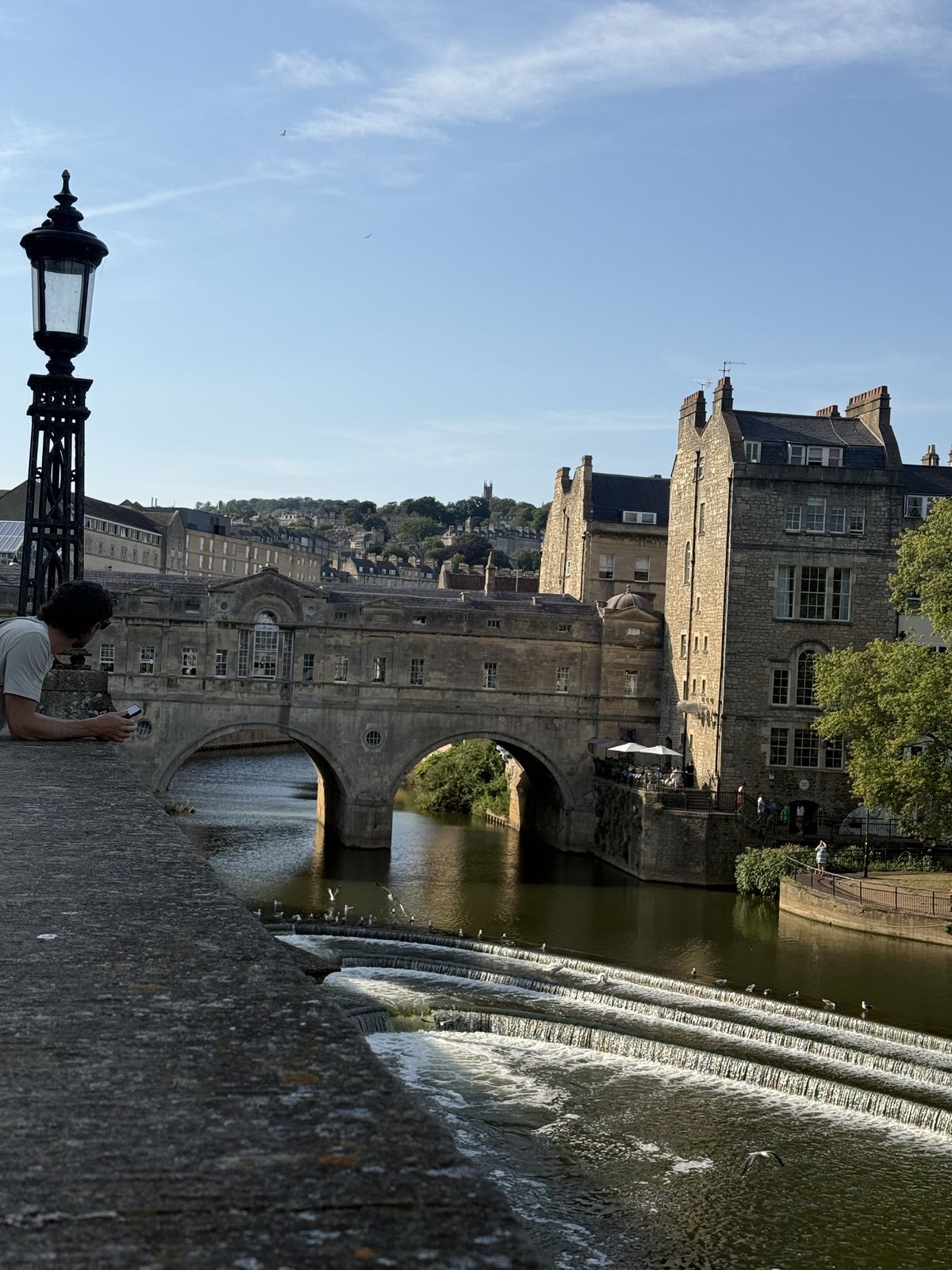
Drop back down toward the river and you reach Pulteney Bridge, which is the sight I'd most wanted to see and somehow still surprised me. Walk over it and it's just a pretty street of little shopfronts. To actually see it, you have to get off it. Cross to the south bank, or wander into Parade Gardens, and look back. Below the bridge the river spills over Pulteney Weir, a curved horseshoe cascade that steps down in a broad fan. On the day I went the water was high and loud and the whole thing was throwing spray.
I stood on the far bank for a good while. It's the postcard shot of Bath for a reason, and in the flesh the sound of the weir makes it.
While you're on that side of the river, Parade Gardens itself is worth the small entry fee in summer. It's a sunken lawn in a bend of the Avon, all flowerbeds and deckchairs, with the weir roaring away just beyond the railings. I bought an ice cream and sat with the bridge in front of me and felt no urge to move for half an hour. On a hot day it's the best-value seat in the city.
How long does the walk take, and how do you get to Bath?
The loop takes about two hours at a stroll, longer with coffee stops, and fits easily into a day trip. GWR's fastest direct train from London Paddington reaches Bath Spa in 1 hour 19 minutes, with around 72 trains on an average weekday, and the station is five minutes from the centre.
For what it's worth, here's how my own afternoon broke down:
| Stop on the loop | Time I gave it |
|---|---|
| Royal Crescent | Twenty minutes flat out on the lawn |
| The Circus and the Gravel Walk | A slow wander, maybe fifteen minutes |
| The quiet lanes | Half an hour of happy detours |
| Pulteney Bridge and the weir | A good while on the south bank |
| Parade Gardens | Half an hour with an ice cream |
| The whole loop | About two hours at a stroll |
You can walk this whole loop in a couple of hours at a stroll, longer if you stop for coffee and a poke around the shops, which you will. It packs neatly into a day trip, and GWR runs the direct trains from Paddington all day. I've written up the London to Bath options if you're weighing train against coach.
The practical numbers, if you're planning tightly:
| Getting in | The detail |
|---|---|
| Fastest direct train, Paddington to Bath Spa | 1 hour 19 minutes |
| Trains on an average weekday | Around 72 |
| Station to the Abbey | About a five-minute walk |
| Driving in | Bath's Clean Air Zone (since March 2021) charges non-compliant taxis, vans, buses and HGVs, but private cars and motorbikes pay nothing |
Honestly, if you'd rather not think about timetables and just be walked through the architecture by someone who knows which lane leads where, a guided day tour from London does exactly that and you keep your eyes up the whole time. Either way, pair this walk with the Roman Baths and you've got the core of Bath in a single day. For fitting everything together, the one day in Bath guide is the one I'd read first.
Plan your next step
Georgian Bath walking tour
Have a travel date in mind? Read the details of the Circus, Royal Crescent and quiet Georgian streets with a local guide. Check your date before arranging the rest of your day.
Allow 2–3 hours; meet and finish at Bath Abbey. Exterior sightseeing on foot; paid interiors and travel to Bath are separate.
Start with this option, or compare the choices below.
Choose a date to see the published schedule.
Compare the options for your Bath plans
| Experience | Why choose it | Allow | What to account for |
|---|---|---|---|
| Georgian Bath walking tour | Read the details of the Circus, Royal Crescent and quiet Georgian streets with a local guide. | 3 hours | Allow 2–3 hours; meet and finish at Bath Abbey. Exterior sightseeing on foot; paid interiors and travel to Bath are separate. |
| City walk & Roman Baths entry | Pair a Blue Badge guided city walk with a self-guided visit inside the Roman Baths. | 3 hours | About 3 hours; meet outside Bath Abbey’s main doors. Roman Baths entry and audio guide included; your guide does not lead the visit inside. |
| Private Austen-inspired Bath walk | Shape a private literary walk around the Austen stories and streets that interest you. | 2 hours | About 1½–2 hours, starting at Bath Abbey. Guide included; transport and museum entry extra. A costumed guide is not guaranteed. Published schedule pricing starts at two adults. |